Remote patient monitoring is moving from a niche digital service into everyday care. A blood pressure cuff on a kitchen table can now send readings to a clinical team before symptoms become an emergency. The question is no longer whether the technology works. It is what industries are adopting remote patient monitoring technology, and why.
The need is substantial. The U.S. Centers for Disease Control and Prevention reports that six in ten adults live with a chronic disease, while four in ten manage two or more. These patients often need regular observation, not occasional appointments. The American Medical Association’s digital health research also shows strong physician interest in tools that improve outcomes and care access. However, adoption is uneven. Connectivity, device accuracy, staff workload, reimbursement, and patient digital skills still shape results.
Market forecasts underline the momentum. Fortune Business Insights estimates that the global remote patient monitoring market could grow from about USD 14 billion in 2023 to more than USD 40 billion in the early 2030s. Forecasts are not guarantees. They may overlook implementation failures and uneven patient engagement. That is worth remembering.
This guide examines seven industries adopting RPM, including hospitals, specialty clinics, home healthcare, senior care, pharmaceutical research, insurers, and medical device companies. Each sector uses different data, workflows, and success measures. A cardiology team may track weight and oxygen levels daily. A research sponsor may monitor adherence between trial visits. The technology is shared. The responsibility is not. Reliable adoption depends on clinical oversight, privacy safeguards, validated devices, and clear escalation procedures.
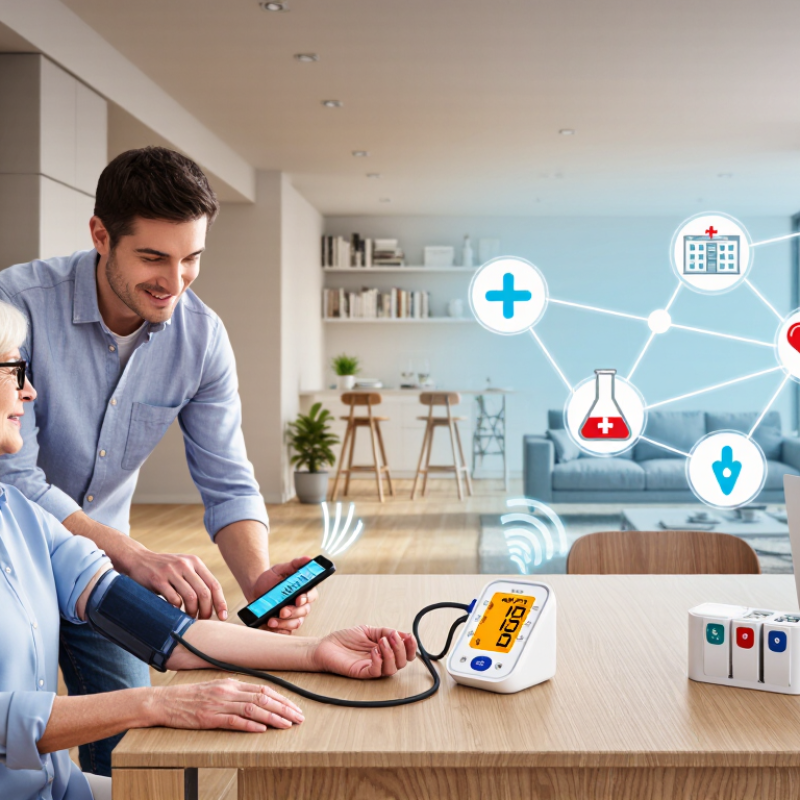
Define RPM Eligibility Through CMS Monitoring Codes and Clinical-Need Criteria
Remote patient monitoring is used across several clinical industries, including cardiology, pulmonology, endocrinology, primary care, and post-acute care. The strongest candidates usually have a chronic condition that needs regular measurements, such as blood pressure, oxygen saturation, glucose, or weight. A diagnosis alone is not enough. The care team should identify a measurable risk and a clear reason to review the data.
CMS monitoring codes help define the operational pathway. Code 99453 generally covers device setup and patient education. Code 99454 relates to supplying a connected device and collecting data. In many cases, the device must transmit readings on at least 16 days within a 30-day period. Code 99457 covers clinical treatment management and requires interactive communication, with additional time reported through 99458 when applicable. Exact requirements may change, so qualified billing staff should verify current CMS guidance.
Clinical judgment remains essential. A patient with unstable heart failure may need close weight monitoring, while another patient may lack the ability to use the equipment safely. That difference matters. Staff should document medical necessity, patient consent, device use, data review, and follow-up actions. Some workflows look efficient on paper but fail when patients miss readings or cannot connect devices. That is a real limitation. RPM works best when clinicians can respond promptly and adjust care based on reliable trends, not isolated numbers.
Tip 1: Prioritize Primary Care—CDC Says 6 in 10 U.S. Adults Have Chronic Disease
Tip 1: Prioritize Primary Care—CDC Says 6 in 10 U.S. Adults Have Chronic Disease
Primary care is the clearest starting point for remote patient monitoring (RPM). The CDC reports that 6 in 10 U.S. adults live with at least one chronic disease. Four in 10 have two or more. This burden makes occasional office measurements incomplete. A blood pressure reading before breakfast may reveal patterns missed during a rushed appointment. A glucose trend can also show how meals, sleep, and medication routines affect daily health.
The CDC’s National Diabetes Statistics Report, 2024, estimates that 38.4 million Americans have diabetes.
The World Health Organization’s Global Report on Hypertension notes that 1.28 billion adults aged 30–79 live with hypertension worldwide.
These figures support RPM in family medicine, internal medicine, and community clinics. Yet technology alone does not improve care. Staff need clear alert thresholds, assigned reviewers, and documented follow-up steps.
Keep the workflow practical.
A patient may place a blood pressure cuff on a kitchen table, not a clinical workstation. Poor positioning can distort results. Weak internet access can interrupt uploads. These details matter. Primary care teams should test device instructions, confirm patient understanding, and review trends instead of reacting to one abnormal number.
The approach is promising, but it is not flawless. Alert fatigue, missed readings, and unequal digital access still require honest evaluation. Regular audits can expose gaps before they affect treatment decisions.
Tip 2: Target Diabetes Care—IDF Reports 537 Million Adults Had Diabetes in 2021
Tip 2: Target Diabetes Care—IDF Reports 537 Million Adults Had Diabetes in 2021
Diabetes is a strong use case for remote patient monitoring. The International Diabetes Federation reported 537 million adults aged 20–79 had diabetes in 2021. By 2030, this number may reach 643 million. Most cases involve type 2 diabetes, which often requires daily management. Remote monitoring can capture glucose readings, medication routines, weight changes, and symptoms between clinic visits.
Small changes matter.
A practical program should connect readings with clinical action. For example, repeated morning glucose elevations may prompt dietary review, medication assessment, or earlier consultation. The World Health Organization estimates that 422 million people worldwide live with diabetes, and diabetes directly causes about 1.5 million deaths annually. These figures show why continuous support matters, especially for people facing travel, mobility, or staffing barriers.
Tip 2: Target Diabetes Care. Start with reliable measurements and clear escalation rules. Patients need simple instructions, suitable devices, and timely feedback from qualified professionals. However, monitoring is not flawless. Connectivity can fail, sensors can produce unusual readings, and some patients may stop recording after several days. That is a real weakness, not a minor detail. Programs should review missing data, check patient understanding, and avoid treating one number as the whole clinical picture. The IDF also projects that diabetes-related health spending reached at least 966 billion US dollars in 2021, highlighting the need for scalable care models with measurable clinical value.
Tip 4: Support Pulmonary Care—WHO Reported 262 Million People Had COPD in 2019
Tip 4: Support Pulmonary Care—WHO Reported 262 Million People Had COPD in 2019
COPD can turn ordinary moments into clinical signals. Stairs feel steeper. Coughing lasts longer. Oxygen levels may drop overnight. The World Health Organization reported that 262 million people had COPD in 2019. It also recorded 3.23 million COPD deaths that year. These figures make pulmonary monitoring more than a convenience. It may help clinicians notice deterioration earlier.
Remote patient monitoring can combine home pulse oximetry, respiratory-rate checks, symptom diaries, and telehealth reviews. A patient might measure oxygen after breakfast and record breathlessness before sleep. Clinicians can compare these trends with treatment plans and warning symptoms. The Global Initiative for Chronic Obstructive Lung Disease 2024 report emphasizes symptom assessment, exacerbation history, and lung-function evaluation. Monitoring supports this process. It does not replace examination or spirometry.
The model is not perfect. Cold fingers, movement, or poor circulation can affect pulse-oximeter readings. Home spirometry also depends on technique. Some patients lack reliable internet access or feel anxious about daily measurements. These gaps require training, repeated checks, and human judgment. Programs should define warning thresholds and confirm abnormal readings. Otherwise, more data may create noise instead of safer care. That limitation deserves honest attention.
7 Tips What Industries Adopt Remote Patient Monitoring? - Tip 4: Support Pulmonary Care—WHO Reported 262 Million People Had COPD in 2019
COPD Burden and Remote Patient Monitoring Opportunities
| Data Dimension |
Verified Data |
Pulmonary-Care Relevance |
Remote Monitoring Application |
| People living with COPD |
262 million people globally in 2019 |
COPD represents a large population requiring long-term respiratory care. |
Collect patient-reported symptoms, medication adherence, activity levels, and home measurements between visits. |
| COPD-related deaths |
3.23 million deaths worldwide in 2019 |
The condition is a significant global cause of mortality and requires ongoing disease management. |
Use trend-based alerts to support earlier clinical review when symptoms or readings worsen. |
| Share of global deaths |
COPD accounted for approximately 6% of all deaths globally in 2019 |
COPD monitoring is relevant to population-health and chronic-care programs. |
Segment patients by risk, review deterioration patterns, and coordinate multidisciplinary follow-up. |
| Geographic burden of mortality |
More than 90% of COPD deaths occur in low- and middle-income countries |
Access barriers can make continuous respiratory follow-up difficult. |
Support home-based follow-up through mobile questionnaires, connected devices, and remote clinical escalation pathways. |
| Major preventable risk factor |
Tobacco smoking contributes to up to 70% of COPD cases in high-income countries and 30–40% in low- and middle-income countries |
Smoking cessation is a central component of COPD prevention and management. |
Track cessation goals, tobacco exposure, counseling participation, and self-reported triggers. |
| Core respiratory measurements |
Common home-monitoring data include oxygen saturation, heart rate, respiratory symptoms, and activity tolerance |
These data can help clinicians evaluate changes in a patient’s condition alongside clinical assessment. |
Combine device readings with symptom questionnaires rather than relying on a single measurement. |
| Care settings that can use RPM |
Pulmonology, primary care, home health, rehabilitation, transitional care, and chronic-disease programs |
COPD care often involves repeated assessment, education, medication review, and follow-up. |
Enable shared care plans, remote check-ins, care-team notifications, and documented escalation workflows. |
Source: World Health Organization (WHO), “Chronic obstructive pulmonary disease (COPD)” fact sheet. Global estimates and risk-factor figures refer to the cited WHO data.
Conclusion
Remote patient monitoring is becoming an important tool for healthcare organizations that need to manage patients beyond traditional clinical settings. This overview explores what industries are adopting remote patient monitoring technology by first explaining how eligibility can be determined through applicable CMS monitoring codes, documented clinical needs, and the ability to collect and review relevant health data. Primary care is a major area of adoption, especially because approximately six in ten U.S. adults live with at least one chronic disease.
Diabetes programs can use remote monitoring to support ongoing glucose management, while cardiology teams may benefit from tracking patients with heart failure, a condition affecting an estimated 6.7 million U.S. adults. Pulmonary care is another strong application, given the global burden of COPD, which affected about 262 million people in 2019. By focusing on appropriate patient selection, consistent data review, and clinically meaningful follow-up, these industries can use RPM to strengthen chronic-care management and improve continuity between visits.

 Ocent Monitor