Remote patient monitoring (RPM) is changing healthcare. It involves using technology to monitor patients outside traditional clinical settings. This approach can provide valuable data on a patient's health status. But how does remote patient monitoring work effectively?
Effective RPM systems utilize devices like wearables and mobile apps. These tools track vital signs, physical activity, and even medication adherence. They send real-time data to healthcare providers, enabling timely interventions. However, the technology needs a reliable internet connection and user engagement to thrive.
Challenges remain. Some patients struggle with technology or lack access. Data privacy concerns also arise. Trust is essential for successful RPM. Overall, when implemented properly, RPM can enhance patient outcomes and broaden access to care. Yet, stakeholders must constantly refine these systems to address limitations and engage users effectively.
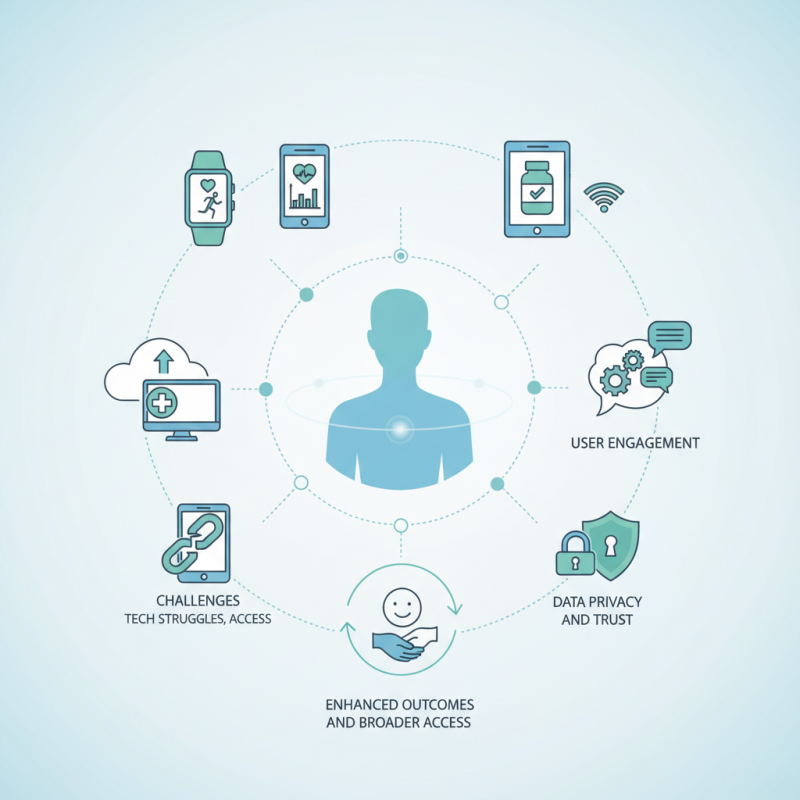
Remote patient monitoring (RPM) systems are transforming healthcare delivery. These systems involve using various technologies to track patients’ health data from a distance. Vital signs, activity levels, and medication adherence are monitored through devices like wearables and mobile apps. This information is transmitted securely to healthcare providers in real time.
Understanding RPM begins with recognizing its core components. Sensors collect data, which is sent to a centralized platform. Healthcare teams analyze this data to detect trends or changes in a patient's condition. This proactive approach can lead to timely interventions. However, challenges remain. Technology integration, data security, and patient engagement can pose hurdles. Not all patients are tech-savvy. Some may struggle with using devices effectively.
Effective RPM relies on clear communication. Patients must understand how to use the tools. Education plays a crucial role here. Regular follow-ups can also help bridge the gap. Providers should strive to make the process as smooth as possible. Continuous feedback from patients can guide improvements. The journey towards efficient RPM is ongoing, requiring collaboration and adaptation from all involved.
Remote Patient Monitoring (RPM) leverages advanced technology to enhance patient care beyond traditional settings. Essential technologies include wearable devices, mobile health apps, and cloud-based platforms. According to a report by Research and Markets, the RPM market is projected to reach $2.5 billion by 2027, driven by the increasing prevalence of chronic diseases. Wearable sensors track vital signs in real time, allowing healthcare professionals to monitor patients’ health proactively.
Mobile health applications play a significant role in managing and analyzing patient data. These apps can notify healthcare providers of any concerning changes, ensuring timely intervention. A report by the Healthcare Information and Management Systems Society states that 70% of patients prefer using telehealth solutions to maintain continuous care. This data highlights the growing acceptance of digital health solutions.
Tips for effective RPM include ensuring patient engagement and simplifying technology use. Educate patients about their devices to promote adherence. Regularly reviewing data helps in understanding long-term trends in health status. However, it’s essential to address potential technical issues. As technology evolves, not all patients may adapt easily. Acknowledging this can lead to improved user experiences and better health outcomes.
Remote patient monitoring (RPM) relies heavily on effective data collection and analysis. This approach allows healthcare providers to track patients' health remotely. A 2021 study by the American Journal of Managed Care reported that RPM can reduce hospital readmissions by 38%. Such reductions highlight the importance of precise data gathering in managing chronic conditions.
Data collection in RPM encompasses various metrics, from vital signs to patient-reported outcomes. Tools like wearable devices and mobile apps record this information. However, the accuracy of these devices can vary. A 2020 review noted that some wearable technologies may present data interpretation challenges. This inconsistency emphasizes the need for healthcare professionals to validate and analyze the collected data thoroughly.
Analyzing this data is crucial for personalizing patient care. Algorithms can help detect trends and anomalies. However, reliance on automated systems can miss nuances in patient health. A 2022 report from the Journal of Telemedicine and Telecare pointed out that nearly 20% of patients experienced communication gaps during data interpretation. This gap underlines the importance of integrating human expertise with technological advancements in RPM.
Remote patient monitoring (RPM) can be highly effective, but it hinges on patient engagement strategies. Engaging patients is crucial for adherence to monitoring protocols. A study by the American Medical Association reveals that 74% of patients prefer tools that allow direct communication with their healthcare providers. This highlights the need for user-friendly interfaces.
To enhance engagement, healthcare providers should prioritize education. Patients need to understand their conditions and the importance of RPM. Interactive materials, such as videos or real-time demonstrations, can boost confidence and knowledge. For instance, a report by the Health Information Management Systems Society suggests that providing educational resources improves compliance by 60%.
**Tips:** Use reminders. Text messages or app notifications can gently nudge patients to check in and stay on track. Regular feedback through these platforms can also maintain motivation.
Additionally, incorporating gamification can encourage better participation. Elements like rewards for consistent monitoring can make the process interactive. However, not all patients respond positively to competition. Some may feel stressed or disengaged. Tailoring approaches based on individual preferences is essential for success. Balancing motivation and patient comfort is key to effective RPM.
Remote Patient Monitoring (RPM) is a powerful tool in modern healthcare, yet it faces significant challenges. Data privacy emerges as a primary concern. Patients often fear that their sensitive health information could be compromised. To address this, healthcare providers must invest in robust encryption and authentication systems. Educating patients about these measures can build trust.
Another challenge is the lack of technological literacy among some patients. Not every individual is comfortable with the devices or apps required for RPM. Training sessions and user-friendly interfaces can bridge this gap. Involving family members in the process might also enhance patient engagement.
Connectivity issues present another hurdle. In rural areas, reliable internet access is often lacking. In such cases, healthcare systems could consider using mobile networks or telehealth solutions that do not rely heavily on stable connectivity. Solutions need to be adaptable to diverse patient needs. Continuous feedback from patients can help in refining these tools for better usability.
: Engagement helps patients adhere to monitoring protocols and improves health outcomes.
Most patients prefer tools that allow direct communication with their providers for better interaction.
Educating patients about their conditions boosts confidence and knowledge, leading to better participation.
Interactive materials, such as videos and real-time demonstrations, can significantly improve compliance rates.
Text messages or app notifications can prompt patients to check in and stay engaged with their routines.
Gamification can encourage engagement through rewards but may stress some patients.
Data privacy, lack of tech literacy, and connectivity issues are significant barriers to effective RPM.
Investing in strong encryption and educating patients about security measures can help build trust.
Training sessions and user-friendly interfaces can aid patients uncomfortable with monitoring technology.
Providers might use mobile networks or telehealth solutions that don't rely on stable internet connectivity.
Remote patient monitoring (RPM) is a critical advancement in healthcare, designed to enhance patient care outside traditional clinical settings. To understand how does remote patient monitoring work effectively, one must first explore the fundamental components of RPM systems, which include devices and software that capture health data from patients in real time. Key technologies, such as wearable sensors and mobile health applications, play a vital role in this process, enabling continuous monitoring and prompt feedback.
Data collection and analysis are central to RPM, as they provide healthcare professionals with valuable insights into patient conditions, leading to improved decision-making. Engaging patients in their own care through effective communication strategies is essential for maximizing compliance and outcomes. However, implementing RPM is not without challenges; issues like data privacy, technology integration, and patient accessibility require thoughtful solutions to ensure the system functions effectively. By addressing these aspects, RPM can significantly enhance patient management and overall healthcare efficiency.

Ocent Monitor