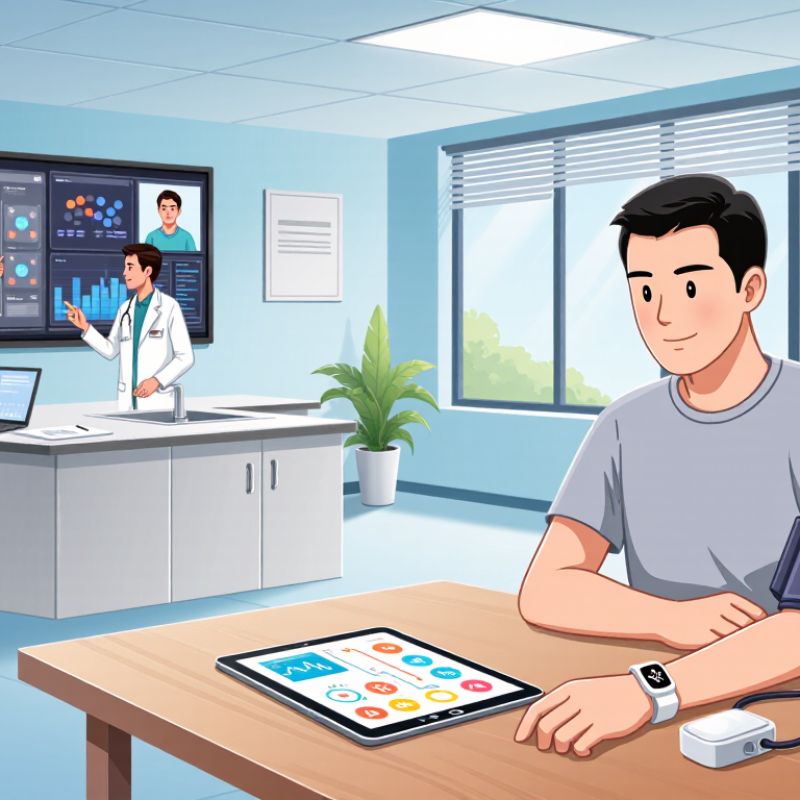
Remote patient monitoring (RPM) uses connected devices to collect health information outside a clinic. A patient may check blood pressure at the kitchen table, while a wearable records heart rate during a normal day. Clinicians can review these readings and follow up when results suggest a change. The technology is practical, but it is not a substitute for clinical judgment or urgent care.
Interest in virtual care accelerated sharply during the pandemic. McKinsey reported that U.S. telehealth use rose from about 11% of visits before COVID-19 to roughly 46% at its peak in 2020. That figure describes telehealth broadly, not RPM alone. Still, it shows how quickly care models can shift. The American Medical Association’s digital health research also points to growing physician use of remote monitoring tools, while highlighting concerns about workflow and data integration. More data does not automatically mean better care.
So, how can hospitals integrate remote patient monitoring systems without overwhelming staff or patients? A sound approach begins with a defined clinical need, such as tracking blood pressure after discharge or monitoring symptoms in chronic heart failure. Hospitals also need clear escalation rules, device support, privacy safeguards, and a reliable way to place readings in clinicians’ workflows. Details matter. A missed transmission or an unread alert can undermine confidence. RPM programs should be assessed for patient access, staff workload, clinical outcomes, and cost—not just the number of devices distributed. Evidence and results vary across populations, and that uncertainty deserves attention. A thoughtful rollout starts small, learns from patients and care teams, and expands only when the service proves useful.
Remote Patient Monitoring Defined: The CMS 16-Day Data Rule for Key Services
Remote patient monitoring (RPM) lets care teams review health readings collected outside the clinic, such as blood pressure from a home cuff. For Medicare billing, the 16-day rule is specific: CPT code 99454 generally requires readings on at least 16 days within a 30-day period. It covers the device and transmission of data. This is not a blanket requirement for every RPM service. CMS’s Physician Fee Schedule guidance should be checked for current coding details and payer requirements.
The threshold changes how hospitals plan care. A patient who measures blood pressure only after feeling dizzy may not meet it; a simple morning routine can help produce consistent readings. But more data is not automatically better. Staff need a process for reviewing alerts, documenting follow-up, and responding when readings suggest risk. McKinsey reported that virtual-care use among consumers was 38 times higher in 2021 than before the pandemic, underscoring the need for workable clinical workflows. RPM still needs careful staffing.
Tips: Confirm device setup before the patient leaves, explain how often to take readings, and assign a team member to check transmission gaps. Keep a visible count of qualifying days, but never ask patients to submit readings that do not reflect real measurements. Small counts matter. CMS rules can change, and hospital billing teams should verify the applicable year’s guidance before claims are submitted.
How RPM Works: Devices, Data Transmission, Clinical Review, and Patient Follow-Up
Remote patient monitoring (RPM) moves health data from a patient’s home to a clinical team. A patient may use a blood pressure cuff, scale, pulse oximeter, or glucose meter. Readings travel through a phone or cellular connection to a secure clinical dashboard. Some devices send data automatically; others require patients to enter results. Small steps matter. A missed reading can reflect a dead battery, poor connection, or a patient who needs help—not just a change in health.
Clinical review turns incoming numbers into action. Teams set patient-specific thresholds, check alerts, and contact patients when readings change or data stop arriving. In its 2022 digital health study, the American Medical Association reported that 30% of surveyed physicians used remote monitoring, up from 12% in 2016. That growth signals interest, not guaranteed clinical benefit. Hospitals still need clear escalation pathways, trained staff, and documented follow-up. A nurse might call after repeated high blood pressure readings, confirm how the cuff was used, and arrange a clinician review when appropriate. Data alone are not care.
Tips: Give patients a brief device demonstration and a simple troubleshooting card. Explain who reviews readings, when calls may come, and what to do in an emergency. Review alert volumes regularly; thresholds that are too sensitive can overwhelm staff, while loose thresholds may delay attention.
Hospital Use Cases: Monitoring Chronic Conditions and Patients After Discharge
Remote patient monitoring (RPM) can help hospital teams follow patients beyond clinic walls, especially those with heart failure, diabetes, or hypertension. The CDC reports that 6 in 10 U.S. adults have at least one chronic disease, and 4 in 10 have two or more. A patient weighing themselves beside the bathroom sink each morning may reveal a concerning trend before their next appointment. For heart failure, teams can review weight, blood pressure, and symptoms, then contact patients when readings change. But a dashboard is not care: readings need clinical review, clear escalation rules, and a plan for patients who lack reliable internet or devices.
After discharge, hospitals can use RPM to track symptoms and vital signs during recovery, helping clinicians spot potential deterioration and arrange timely follow-up. The evidence is promising, but outcomes depend on the condition, program design, and patient engagement; monitoring alone does not prevent readmissions. The Centers for Disease Control and Prevention’s chronic disease statistics underline the scale of need, while hospital teams should assess their own readmission data and identify where follow-up gaps occur. A missed reading may mean a worsening condition—or simply a dead battery. It deserves context.
Tips: Keep enrollment simple. Confirm the patient can use the device, explain which symptoms require an immediate call, and name who reviews readings and when. Set thresholds with the treating team, not as one-size-fits-all defaults. Check in after the first few days; small workflow problems can quietly undermine a sound clinical plan.
RPM’s Growth in Medicare: Payments Rose from $6.8M in 2019 to $194.5M in 2022
Remote patient monitoring, or RPM, lets clinical teams track health data from a patient’s home. Common measurements include blood pressure, blood glucose, weight, and oxygen levels. A connected device sends readings to a care platform, where trained staff review changes and contact patients when needed.
Medicare’s RPM payments show how quickly this model has expanded. Payments rose from $6.8 million in 2019 to $194.5 million in 2022. That increase suggests broader use, stronger administrative support, and greater provider interest. Hospitals can use RPM for patients with heart failure, diabetes, hypertension, or recovery needs after discharge. A nurse may notice three rising weight readings and call before swelling becomes severe.
Small details matter. Hospitals need clear enrollment, patient consent, reliable devices, and documented clinical work. Staff should define who reviews alerts and how quickly they respond. They also need to protect health information during transmission and storage. The numbers are promising. Yet payment growth does not prove better outcomes by itself. Some patients lack stable internet, confidence with technology, or time to measure correctly. Devices can also produce false alerts. Care teams must question the data, not simply accept every reading. That part remains imperfect.
Medicare Remote Patient Monitoring Payments Grew
Reported payments increased from $6.8 million in 2019 to $194.5 million in 2022.
The reported total rose nearly 29-fold over this period. Values are shown in millions of U.S. dollars.
Hospital Implementation: Staffing, Data Security, Patient Access, and Care Escalation
What Is Remote Patient Monitoring? How Can Hospitals Use It?
Remote patient monitoring lets hospitals collect health data from patients at home. Devices may record blood pressure, oxygen levels, weight, glucose, or heart rate. Clinical teams review these readings and respond when results cross agreed thresholds. The process is not simply about sending numbers to a dashboard. It connects home observations with professional judgment, documented care plans, and timely patient contact.
Hospital implementation begins with clear staffing responsibilities. A nurse may review alerts during defined hours, while a physician or specialist handles complex changes. Each alert needs a documented response time. Patient data should be encrypted during transfer and storage. Access must follow job responsibilities, with strong identity checks and audit records. Staff training also matters. A technically secure system can still fail when users misunderstand an alert.
Patient access requires practical planning. Hospitals should offer simple instructions, accessible devices, language support, and alternatives for patients without reliable internet. A short test call can expose problems early. Care escalation should include specific thresholds, contact scripts, and emergency guidance. Not every abnormal reading requires an emergency visit. However, delayed action can be dangerous. Teams may initially overreact to noisy data, and that weakness deserves review. A small pilot, regular case audits, and direct patient feedback can improve the workflow before wider use.
Conclusion
Remote patient monitoring (RPM) uses connected devices to collect health information—such as blood pressure, blood glucose, weight, or oxygen levels—and securely transmit it to a care team for review. For key Medicare RPM services, the CMS 16-day data rule generally requires eligible physiologic measurements on at least 16 days within a 30-day period. After reviewing incoming data, clinicians can contact patients, adjust care plans, or arrange follow-up when readings indicate a concern.
Hospitals can use RPM to support people with chronic conditions and to keep track of patients after discharge, potentially identifying changes before they require urgent attention. Medicare payments for RPM grew from $6.8 million in 2019 to $194.5 million in 2022, reflecting its expanding use. To determine how can hospitals integrate remote patient monitoring systems effectively, they need to plan staffing and clinical review workflows, protect patient data, make devices and support accessible, and establish clear thresholds and procedures for escalating concerning readings.

 Ocent Monitor