Remote patient monitoring is changing how clinicians observe patients beyond hospital walls. But what is remote patient monitoring in healthcare? It uses connected devices to collect health data, such as blood pressure, glucose, oxygen saturation, and heart rate. Clinicians then review that information and respond when readings suggest deterioration. A useful example is a patient checking oxygen levels at home while a care team tracks abnormal results through a secure dashboard.
The commercial opportunity is expanding. Grand View Research estimated the global remote patient monitoring market at approximately USD 14 billion in 2023. Its report also projected strong growth through 2030, driven by chronic disease management, aging populations, and connected medical devices. Fortune Business Insights reported similar momentum, although market estimates differ between studies. Definitions are not always consistent. That matters.
China has become an important manufacturing and technology base for monitoring devices, software platforms, sensors, and integrated care solutions. The suppliers reviewed in this article may support hospitals, clinics, distributors, and home-care programs. Their capabilities can vary significantly. Some focus on wearable hardware, while others provide cloud platforms, telehealth integration, or complete monitoring services.
This China Top 10 Remote Patient Monitoring Suppliers guide evaluates practical factors, including product certifications, clinical usability, data security, device accuracy, interoperability, production capacity, and after-sales support. It also considers evidence behind each supplier’s claims rather than relying only on marketing language. No supplier is perfect. Buyers should still verify regulatory requirements, validation records, cybersecurity controls, and local service arrangements before purchasing. Those checks can prevent an impressive demonstration from becoming an expensive operational problem.
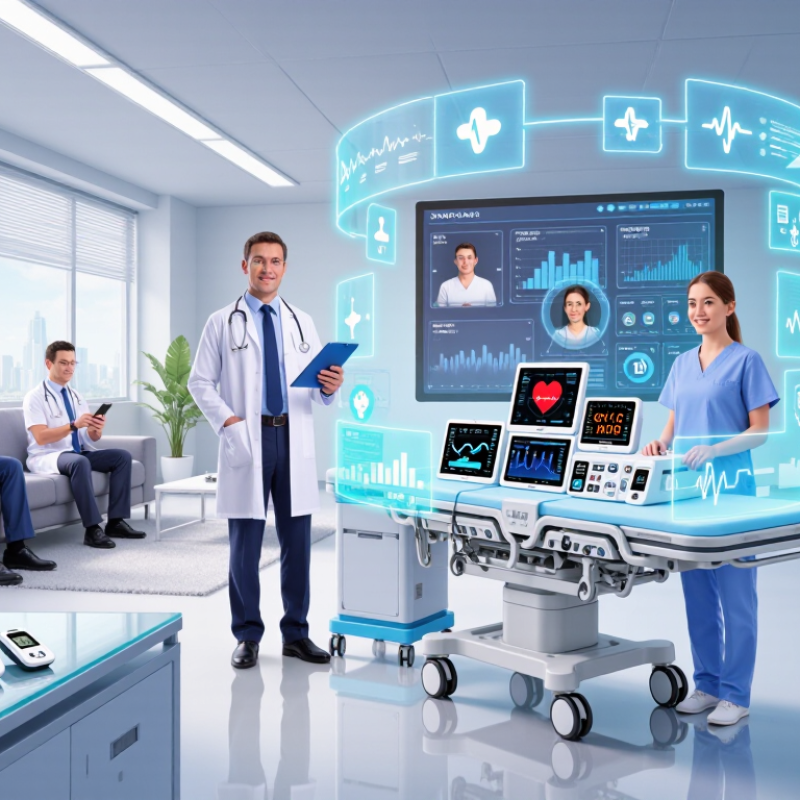
Remote patient monitoring, or RPM, uses connected devices to collect health data outside hospitals. A patient may measure blood pressure, oxygen levels, weight, or glucose at home. The readings travel through a secure platform to authorized clinical teams. Professionals can then review trends and contact patients when measurements change.
China matters because its large population creates strong demand for scalable healthcare services. An aging population also increases the need for long-term monitoring. Many patients live far from major medical centers. Home-based monitoring can reduce unnecessary travel and support follow-up care after discharge. However, technology alone cannot replace clinical judgment.
China also has extensive electronics manufacturing and growing digital health infrastructure. This environment supports suppliers that develop sensors, software, communication tools, and hospital integration services. Reliable suppliers should provide device accuracy data, clinical validation, data protection, and responsive technical support. They should also understand local hospital workflows and regional healthcare differences.
The details matter. A poorly fitted cuff can produce misleading blood pressure readings. Weak internet access can delay alerts. Patients may also forget to charge devices or record symptoms. Small failures become serious when teams assume the data is complete.
RPM is useful, but it is not effortless. Hospitals need trained staff, clear escalation rules, and regular patient education. Suppliers must prove performance in real settings, not only in product demonstrations. China’s opportunity is substantial, yet careful evaluation remains necessary.
Evaluating China’s remote patient monitoring suppliers requires more than comparing product catalogs. Check clinical experience, device accuracy, and software stability. Ask for validation data from real healthcare settings. A blood pressure monitor should perform consistently after repeated use, not only during a showroom demonstration. Review certification records, cybersecurity controls, and data storage procedures. These details show professional discipline.
Tips: Request sample devices, test them for two to four weeks, and record error rates. Ask how suppliers handle calibration, firmware updates, technical support, and device replacement. Speak with hospitals or clinics that have used the system. Their feedback may reveal weak onboarding or delayed service. Do not rely on polished presentations.
Reliable suppliers should provide clear integration documents for hospital information systems. Confirm whether their platform supports common data standards and secure user access.
Examine alert settings carefully, because excessive notifications can burden nurses. Poorly designed alerts may also hide urgent readings. Pricing matters, but low cost can reflect limited support or incomplete testing. That assumption needs checking.
Assess the supplier’s manufacturing controls, batch traceability, training materials, and response time during technical failures. Request evidence rather than broad promises. A transparent supplier will explain known limitations. No system is perfect. In practice, connectivity gaps, elderly users, and incorrect device placement can affect results. A strong evaluation plan should measure these problems before long-term procurement.
China’s Top 10 Remote Patient Monitoring Suppliers represent a broad healthcare technology market. They typically provide connected blood pressure monitors, pulse oximeters, glucose meters, ECG devices, wearable sensors, and cloud dashboards. Hospitals and clinics often use these tools to observe patients after discharge, track chronic conditions, and identify unusual readings earlier. Supplier quality depends on more than device appearance. Buyers should examine measurement accuracy, data security, platform stability, battery life, and support for clinical workflows.
A reliable evaluation should include evidence from validation studies, quality management records, and real hospital use. Check whether the supplier offers clear instructions, staff training, maintenance plans, and responsive technical support. Data should move securely from the patient’s home to authorized medical professionals. Integration with existing hospital systems also matters, especially when nurses review hundreds of readings each day. However, any top-ten list can be imperfect. Market rankings may reflect visibility rather than long-term clinical performance, so independent verification remains necessary.
Tips: Request sample reports before signing a contract. Test devices with older users and weak internet connections. Compare alert settings carefully, because excessive notifications can burden clinical teams. Ask how errors, lost connections, and abnormal readings are documented. A supplier that explains limitations openly may be more dependable than one promising flawless monitoring.
China Top 10 Remote Patient Monitoring Suppliers: Key Technologies and Services
China’s leading remote patient monitoring suppliers typically combine connected devices, cloud platforms, and clinical support services. Their portfolios often include wearable ECG sensors, pulse oximeters, blood pressure monitors, glucose meters, and smart thermometers. Bluetooth, cellular networks, and secure application programming interfaces connect these devices with hospital systems. The technology looks seamless. Real-world deployment is less perfect.
Grand View Research estimates that the global remote patient monitoring market will expand at an annual rate above 18% through 2030. This growth increases demand for accurate measurements and faster clinical responses. Suppliers now provide dashboards that flag abnormal readings, generate trend reports, and support nurse-led follow-up. Some platforms also use artificial intelligence to identify possible deterioration. However, algorithms still require clinical review, especially when patients have multiple conditions.
Interoperability is another major service. Suppliers increasingly support HL7 and FHIR-based data exchange, helping hospitals connect monitoring platforms with electronic medical records. Security services usually include identity management, encryption, audit trails, and controlled data access. The World Health Organization’s global digital health strategy emphasizes trusted governance and usable health data, not technology alone. That distinction matters. A poorly trained patient may place a sensor incorrectly, creating misleading results. Strong suppliers therefore offer onboarding, device calibration, technical support, and periodic quality checks. Market rankings can be useful, but hospital fit, evidence quality, response workflows, and local service capacity deserve closer examination.
Technology and service categories commonly provided by leading remote patient monitoring suppliers in China
Remote patient monitoring solutions in China commonly combine connected vital-sign devices, cloud platforms, mobile applications, clinical dashboards, data integration, and follow-up services. Core monitoring areas include blood pressure, blood glucose, oxygen saturation, temperature, ECG, and weight.
Selecting among China’s top remote patient monitoring suppliers requires more than comparing device prices. Start with the clinical problem: blood pressure, glucose, oxygen saturation, or cardiac rhythm. The World Health Organization reports that noncommunicable diseases caused 74% of global deaths in 2021. Reliable monitoring can support earlier intervention, especially for older patients living far from hospitals. However, a connected device is not automatically a useful clinical tool.
Ask each supplier for validation evidence, not attractive product images.
Check accuracy testing, sample size, patient population, and calibration procedures. Confirm compliance with ISO 13485, ISO 14971, and applicable medical-device requirements. Review cybersecurity controls against current regulatory guidance. The FDA identifies connected-device cybersecurity as a safety concern, not merely an information-technology issue. Small details matter. Can the device store readings offline? Does it alert nurses when batteries are low? Can clinicians export data in standard formats?
Evaluate the supplier’s support after installation. Request response-time records, software update procedures, training materials, and a clear escalation process. The WHO Global Strategy on Digital Health stresses interoperability and user-centered design. A supplier may promise integration, yet provide only a limited interface. That weakness can create manual work for staff. Pilot the system with real patients for four to eight weeks, including patients with poor connectivity. Measure missing readings, false alerts, staff workload, and patient adherence. Procurement teams sometimes overvalue technical specifications. That is understandable, but clinical usability usually decides whether monitoring survives beyond the pilot.
Review clinical experience, device accuracy, software stability, certifications, and cybersecurity controls. Do not trust a polished demonstration alone.
Request sample devices and test them for two to four weeks. Record errors after repeated blood pressure readings, not just one successful test.
Suppliers may offer blood pressure monitors, pulse oximeters, glucose meters, ECG devices, and wearable sensors. Cloud dashboards often collect the readings.
Include older adults and people using weak internet connections. Incorrect device placement can change results. That risk deserves honest measurement.
Confirm secure data transfer, authorized user access, storage procedures, and cybersecurity controls. Ask whether the platform supports common healthcare data standards.
Excessive alerts can overwhelm nurses reviewing hundreds of readings. Poor settings may hide urgent readings. Alert design needs practical testing.
Ask about calibration, firmware updates, device replacement, staff training, and technical response times. Delayed support can disrupt home monitoring.
Rankings may reflect visibility rather than long-term clinical performance. Independent verification remains necessary. No list is perfect.
Request validation studies, quality records, sample reports, manufacturing controls, and batch traceability. Speak with hospitals or clinics using the system.
Low cost may reflect limited support or incomplete testing. That assumption needs checking. Compare the full service, not only the device price.
This article explains what is remote patient monitoring in healthcare and why China has become an important source of connected medical devices and digital health services. It introduces the main functions of remote monitoring, including collecting patient data outside traditional clinical settings, supporting continuous observation, and helping healthcare teams make more timely decisions. The article also outlines practical criteria for evaluating suppliers, such as product reliability, data security, regulatory readiness, device compatibility, technical support, manufacturing capability, and service scalability.
It then presents a neutral overview of ten leading types of Chinese remote patient monitoring suppliers without focusing on brand names, highlighting the technologies and services they commonly provide, including wearable sensors, vital-sign monitoring, cloud platforms, data integration, analytics, and customized solutions. Finally, the article offers guidance for selecting a suitable supplier according to clinical goals, patient populations, budget, deployment environment, interoperability requirements, and long-term support needs.

Ocent Monitor