2026 Top Types What Is the Future of Remote Patient Monitoring?

Time:2026-09-29 Author:Mason
0%

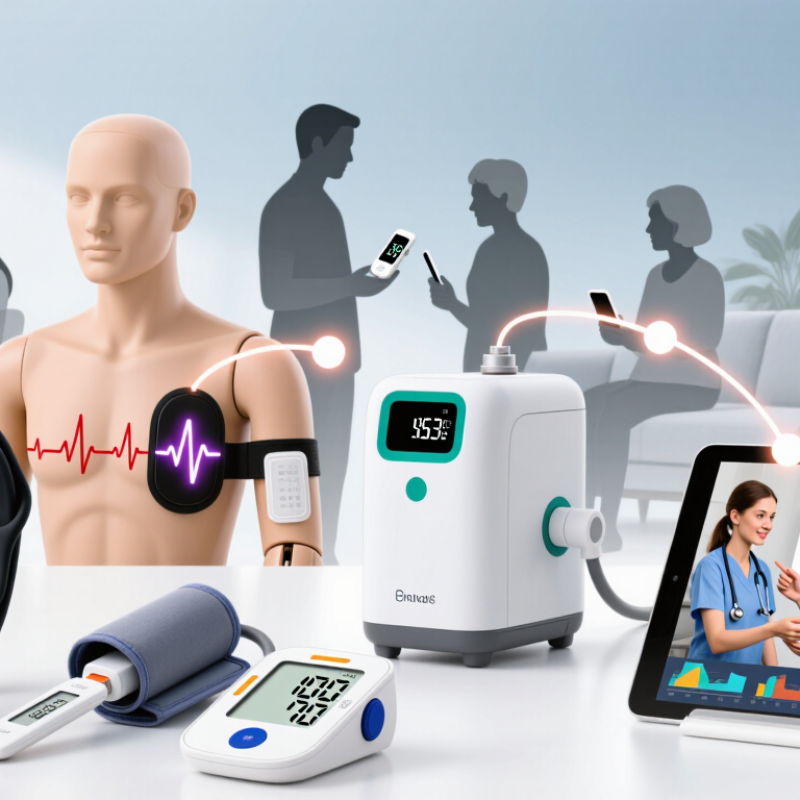
Remote patient monitoring is moving from a convenient digital service to a practical part of everyday healthcare. In 2026, its leading types may include wearable monitoring, connected blood pressure devices, glucose sensors, cardiac trackers, and home-based respiratory tools. Each device can capture valuable changes before a patient reaches a clinic. A morning blood pressure reading, an irregular pulse alert, or a rising oxygen trend may help clinicians respond earlier. However, data alone does not improve care. It must be accurate, secure, understandable, and linked to a qualified professional’s decision.

So, what is the future of remote patient monitoring? The answer will depend on how well technology supports real clinical relationships. Artificial intelligence may identify patterns across thousands of readings, while video consultations can add context that numbers cannot provide. A nurse may notice that a patient looks exhausted, even when the dashboard appears stable. This human judgment remains essential. Remote systems should reduce unnecessary travel, not replace thoughtful medical evaluation.

The strongest platforms will likely combine reliable sensors, clear patient instructions, rapid alerts, and meaningful follow-up. They must also work for older adults, people with limited internet access, and patients managing several conditions. The industry still has weaknesses. False alerts can create anxiety, and complicated apps can discourage regular use. Some forecasts sound overly confident. Real progress requires measured evidence, transparent testing, and feedback from patients and clinicians. The future may be promising, but it will not be automatic. Trust must be earned reading by reading, conversation by conversation.
2026 Top Types What Is the Future of Remote Patient Monitoring?

Definition and Scope of Remote Patient Monitoring

Remote patient monitoring (RPM) is the collection and review of health data outside a clinic, often in a patient’s home. A cuff, scale, pulse oximeter, or glucose meter may record readings and send them through a phone or hub. Some programs also include brief symptom check-ins. The defining feature is not the device. It is a planned process connecting measurements with clinical review and follow-up. A care team, for example, might examine several morning blood pressure readings instead of reacting to one isolated result. Simple, but not effortless.

RPM’s scope includes choosing relevant measures, teaching patients how to use equipment, setting alert limits, reviewing readings, and documenting follow-up. The exact process depends on a person’s health needs and the care team’s capacity. It can support chronic care or recovery, but it does not replace an examination or urgent care. Readings can be missed, delayed, or affected by poor technique; a precise-looking number may still lack context. Patients need clear instructions about what to do when results fall outside their agreed range. They also need to know when and how the care team will respond. RPM is not continuous supervision.

Core Technologies Powering Remote Patient Monitoring

Remote patient monitoring depends on a practical chain: sensors, secure connections, clinical software, and timely human review. A blood-pressure cuff or pulse oximeter captures readings at home; Bluetooth or cellular links send them to a care platform. Simple alerts can flag a rising trend before the next appointment. Sensors are only the start.

The American Medical Association’s 2022 Digital Health Research found that 30.2% of surveyed physicians used remote monitoring devices, up from 12.5% in 2016. That growth makes interoperability essential. Data should move into clinical workflows in a readable format, not another inbox that staff must check manually. Cloud systems help organize streams of readings, while analytics can identify meaningful changes. But an algorithm is not a diagnosis. Clinicians need context, such as medication changes or a patient’s usual range.

Security and usability matter just as much. Clear consent, access controls, and encrypted data transfers protect sensitive readings. A device with confusing instructions may produce gaps, even if its technology is excellent. Yet more data can create noise, and many programs still struggle to decide which alert deserves a call. Human judgment remains central.

What Is the Future of Remote Patient Monitoring?

Core technologies will help care teams monitor patients beyond the clinic. An aging population is one reason demand for accessible, continuous care is growing.

What the chart shows: The World Health Organization estimates that the number of people aged 60 and older will rise from 1.0 billion in 2020 to 2.1 billion by 2050. These are population estimates, not remote-monitoring adoption figures.

Core technologies: Connected sensors and wearables capture health measurements; mobile networks and apps transmit them; cloud platforms store and organize data; and analytics can help care teams identify readings that may need follow-up.

Source: World Health Organization, “Ageing and health” fact sheet.

Major Types of Remote Patient Monitoring in 2026

Remote patient monitoring in 2026 will extend beyond simple blood pressure checks.

Major types include vital-sign monitoring, chronic disease monitoring, post-discharge care, and wearable-based observation. Devices can track blood pressure, glucose, oxygen saturation, weight, heart rhythm, and temperature from a patient’s home.

The Centers for Disease Control and Prevention reports that six in ten U.S. adults live with at least one chronic disease.

This creates strong demand for continuous diabetes, cardiac, respiratory, and hypertension monitoring.

A 2024 Grand View Research report estimated the global remote patient monitoring market at about 14 billion U.S. dollars in 2023, with rapid growth expected through 2030.

The number is impressive. Yet growth alone does not prove better care.

Post-acute monitoring is becoming more practical after surgery or hospital discharge. Clinicians can review daily readings and identify warning signs before symptoms become severe.

Wearable sensors also support mobility tracking, sleep observation, and fall-risk assessment. Implantable devices provide deeper cardiac data, but they require stricter clinical oversight.

Mobile applications connect these data streams, though poor internet access and user fatigue remain real barriers.

The model is not flawless.

A patient may ignore a device, record inaccurate readings, or feel watched instead of supported. Reports often measure adoption, but fewer studies capture long-term patient trust, workload, and clinical outcomes.

Benefits, Risks, and Clinical Challenges

Remote patient monitoring is moving from a pilot project to routine care. Its strongest value appears in chronic disease management, where home readings can reveal silent deterioration. The American Medical Association’s 2022 digital health study reported that 93% of physicians saw advantages in digital health tools. Still, adoption does not guarantee better outcomes. A 2024 systematic review in JAMA Network Open found that remote monitoring benefits varied by condition, patient engagement, and clinical response time. Data alone is not treatment.

The risks are practical and clinical. False alerts may flood nurses with low-value signals. Poor connectivity can exclude older adults and rural patients. Wearable devices may produce inaccurate readings because of movement, skin contact, or improper placement. Privacy also remains a daily concern. The WHO Global Strategy on Digital Health stresses governance, interoperability, and equitable access, but many health systems still struggle to connect home devices with clinical records. That gap can delay decisions. It can also create liability.

Tips: Set alert thresholds with clinicians, not vendors. Give patients clear instructions and backup options. Track response times, missed readings, and hospital visits. Test devices with diverse users. Small failures matter.

The clinical workflow needs redesign. A nurse cannot safely monitor hundreds of alerts without triage rules, staffing, and escalation pathways. Some programs also assume constant patient motivation, which is unrealistic. The future may depend less on collecting more data and more on selecting useful signals, explaining uncertainty, and acting before deterioration becomes visible. That remains difficult.

Future Trends Shaping Remote Patient Monitoring

Remote patient monitoring is moving beyond home blood-pressure cuffs and glucose meters. Future systems will combine wearable sensors, connected scales, medication data, and patient-reported symptoms. Grand View Research estimates that the global remote patient monitoring market could grow from about $14 billion in 2023 to more than $41 billion by 2030. The growth reflects a practical shift: care teams can observe daily changes instead of relying only on occasional clinic visits.

Artificial intelligence will increasingly sort readings, identify unusual patterns, and prioritize human review. It should reduce alarm fatigue, but imperfect algorithms remain a serious concern. A 2024 World Health Organization report stresses the need for safe, transparent, and accountable digital health systems. In practice, nurses may receive a focused alert when weight rises sharply over three days, rather than reviewing hundreds of routine measurements. Interoperability will also matter. Data must move securely between home devices, clinical records, and care platforms without forcing staff to re-enter information.

The strongest programs will be hybrid. Technology can extend clinical reach, but it cannot replace trust, physical assessment, or clear conversations. The 2023 HIMSS Future of Healthcare report highlights interoperability, cybersecurity, and workforce readiness as continuing priorities. Future devices may become smaller and more passive, collecting signals during sleep or normal movement. Yet access remains uneven. Some patients lack reliable internet, digital confidence, or affordable equipment. Designing for those realities may prove more important than adding another sensor. Expect progress, but not perfection.

2026 Top Types: What Is the Future of Remote Patient Monitoring? — Future Trends Shaping Remote Patient Monitoring
Future Trend Relevant Data Dimension Verified Baseline Why It Matters for 2026 Expected Operational Change Evidence Source
Expansion from episodic care to continuous chronic-care monitoring Global chronic disease burden 74% of deaths globally were attributed to noncommunicable diseases in 2021. Large chronic-care populations create sustained demand for home-based monitoring of blood pressure, glucose, oxygen saturation, weight, and symptoms. Programs will increasingly prioritize risk-based enrollment, longitudinal trends, and earlier intervention rather than isolated readings. World Health Organization, Noncommunicable Diseases Fact Sheet, 2023
Remote monitoring designed for older adults Population aging Approximately 1 in 6 people worldwide is projected to be aged 60 or over by 2030; the global 60-plus population is projected to reach 2.1 billion by 2050. Age-related chronic conditions and mobility limitations increase the value of monitoring that can be delivered without frequent travel. Successful solutions will need larger displays, simple workflows, caregiver access, multilingual instructions, and accessibility features. United Nations, World Social Report 2023
Connected-device and home-measurement ecosystems Internet access and device connectivity About 5.4 billion people, or roughly 67% of the world’s population, were online in 2023. Higher connectivity supports more frequent transmission of patient-generated health data, but access gaps remain important. Programs will combine cellular, Wi-Fi, Bluetooth, and offline workflows while tracking connectivity failures as a quality metric. International Telecommunication Union, Facts and Figures 2023
Greater emphasis on interoperability Data exchange and clinical integration U.S. regulatory frameworks increasingly support standardized electronic health information exchange, including standardized APIs and FHIR-based interoperability initiatives. RPM data has limited value when clinicians must manually copy readings between disconnected systems. Selection criteria will increasingly include structured data export, identity matching, audit trails, consent management, and integration with clinical records. U.S. Office of the National Coordinator for Health IT, interoperability and health IT certification regulations
Use of analytics and artificial intelligence for triage Alert volume and clinical workload RPM can generate repeated physiologic measurements that require prioritization; however, no universal threshold exists for safe automated clinical decision-making across all conditions. In 2026, analytics will be used primarily to identify deterioration patterns, missing data, and patients requiring human review. Organizations will need validated algorithms, documented escalation rules, bias monitoring, human oversight, and clear accountability for alerts. U.S. Food and Drug Administration, digital health and artificial intelligence guidance
More structured reimbursement and documentation workflows Medicare RPM service requirements in the United States For certain Medicare RPM services, physiologic data generally must be collected for at least 16 days in a 30-day period; interactive communication and documented treatment-management time are also required for applicable services. Payment eligibility depends on compliant data collection, clinical review, patient consent, communication, and time documentation. RPM platforms will increasingly include automated documentation, eligibility checks, exception handling, and audit-ready records. U.S. Centers for Medicare & Medicaid Services, Medicare Physician Fee Schedule and RPM billing guidance
Security and privacy by design Cybersecurity governance The NIST Cybersecurity Framework 2.0, published in 2024, organizes cybersecurity outcomes under six functions: Govern, Identify, Protect, Detect, Respond, and Recover. RPM devices transmit health information outside traditional clinical facilities, increasing the importance of device, cloud, identity, and network controls. Procurement will place more weight on encryption, secure updates, least-privilege access, incident response, vulnerability management, and data minimization. National Institute of Standards and Technology, Cybersecurity Framework 2.0, 2024
Hybrid care and hospital-at-home support Care location and service model Remote care models use digital communications and connected measurements to support clinical services outside traditional facilities; implementation requirements vary by condition and jurisdiction. RPM will increasingly operate as one component of hybrid care pathways involving virtual visits, home visits, medication management, and escalation to in-person care. Future programs will measure clinical outcomes, response time, patient experience, equity, avoidable utilization, and total cost of care together. World Health Organization, global digital health and integrated-care frameworks
Equity-focused deployment Digital divide and accessibility Internet access is not evenly distributed by income, geography, age, disability, or education level; global connectivity statistics therefore do not represent universal access. Device-only models can exclude patients who lack reliable broadband, smartphones, digital skills, transportation, or language support. Leading programs will provide loaner devices, cellular connectivity when needed, technical support, human alternatives, and outcome reporting by demographic group. International Telecommunication Union, Facts and Figures 2023; World Health Organization, digital health equity guidance

FAQS

What technologies support remote patient monitoring?

Home sensors measure blood pressure, oxygen levels, weight, or glucose. Bluetooth or cellular networks transmit readings securely. Clinical software organizes the data and highlights changes. Sensors are only the starting point.

How can remote monitoring help chronic disease care?

Daily readings may reveal gradual deterioration before a clinic visit. A three-day weight increase could signal fluid retention. Care teams can respond earlier. Data alone is not treatment.

Can automated alerts replace clinical judgment?

No. Algorithms can identify unusual patterns, but they cannot fully understand each patient’s history. Medication changes and personal baselines matter. The model can be wrong.

What problems can remote monitoring create?

False alerts may overwhelm nurses with low-value signals. Poor internet access can exclude rural or older patients. Movement or incorrect placement can distort readings. More data can create noise.

How should alert systems be designed?

Clinicians should help set practical alert thresholds. Care teams need triage rules and escalation pathways. Response times should be tracked. Some thresholds may still need revision.

How can patient data remain secure?

Programs need clear consent, access controls, and encrypted transfers. Data should move directly into readable clinical workflows. Staff should avoid unnecessary manual copying. Privacy is a daily responsibility.

What should patients do when a device fails?

Patients need simple instructions and backup options. They should check sensor placement and connection status. Missed readings should be recorded honestly. Perfect participation is unrealistic.

What will future remote monitoring systems look like?

Future systems may combine wearable sensors, connected scales, medication information, and symptoms. Smaller devices could collect signals during sleep or normal movement. Human review will remain essential. Progress will not be perfect.

Conclusion

Remote patient monitoring (RPM) refers to the collection, transmission, and clinical interpretation of patient health data outside traditional healthcare facilities. Using connected sensors, mobile applications, wearable devices, and secure communication systems, RPM can track vital signs, symptoms, medication responses, and lifestyle indicators. In 2026, major types are expected to include chronic disease monitoring, post-discharge follow-up, elderly care, maternal health support, and continuous monitoring for high-risk patients. These applications may improve early intervention, reduce unnecessary hospital visits, and make care more personalized and accessible.

However, RPM also faces challenges, including data accuracy, patient engagement, technology access, privacy protection, cybersecurity, and the risk of overwhelming clinicians with excessive alerts. The question “what is the future of remote patient monitoring” will increasingly depend on how effectively healthcare systems combine artificial intelligence, interoperable data platforms, predictive analytics, and human-centered care. Future development will likely focus on reliable devices, clearer clinical workflows, stronger data governance, and equitable access, ensuring that remote monitoring supports—not replaces—professional medical judgment.

Mason

Mason

Mason is a seasoned marketing professional with a deep expertise in the company's offerings and a passion for driving brand awareness. With a strong background in digital marketing strategies, he has an innate ability to connect with diverse audiences and effectively communicate product benefits.......