Understanding remote patient monitoring in healthcare is crucial in today's fast-evolving medical landscape. What is remote patient monitoring in healthcare? It involves using technology to track patients' health data from home. This method is becoming a cornerstone in modern healthcare strategies.
By collecting real-time data, healthcare professionals can make informed decisions. Patients gain convenience and can maintain their routines while getting monitored. This dual benefit increases patient engagement and compliance. However, challenges remain. Data privacy concerns and technology accessibility can hinder widespread adoption.
Moreover, not all patients are tech-savvy. Training and resources are essential for successful implementation. It is clear that while remote patient monitoring offers significant advantages, it requires careful consideration. The balance between innovation and practical application demands ongoing reflection and improvement.
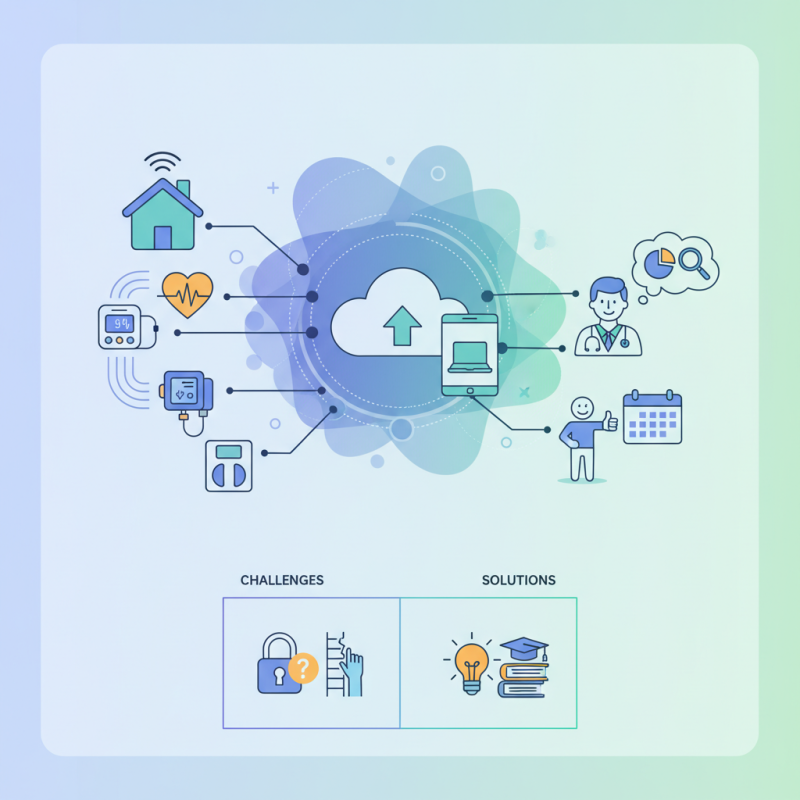
Remote patient monitoring (RPM) is transforming healthcare by enabling continuous tracking of patient health outside traditional clinical settings. According to a report by Grand View Research, the global RPM market is expected to reach $2.13 billion by 2027, reflecting a compound annual growth rate (CAGR) of 37.6%. This growth emphasizes the increasing reliance on technology for managing chronic conditions, promoting patient engagement, and reducing healthcare costs.
Patients benefit from real-time data collection through wearable devices and mobile apps. RPM allows for more efficient communication between patients and healthcare providers. Clinical staff can quickly respond to abnormal readings. This proactive approach can lead to timely interventions. However, healthcare professionals must navigate challenges about data privacy and the quality of the devices used.
Tips: Ensure any RPM devices comply with industry standards. Regular training sessions on device use can enhance patient comprehension. Always validate the accuracy of collected data before making medical decisions. RPM is not a one-size-fits-all solution. It requires customization for each patient's unique needs and conditions. Balancing technology with personal care is essential for effective RPM implementation.
Remote Patient Monitoring (RPM) is reshaping healthcare delivery.
Key technologies drive this transformation. Wearable devices, such as smartwatches and fitness bands,
play a central role. Patients can track vital signs like heart rate and blood pressure in real time.
These devices collect data that can inform healthcare professionals about a patient’s condition.
Telehealth platforms facilitate direct communication between patients and providers.
Virtual consultations are now common. They eliminate the need for traditional in-person visits.
This convenience can lead to better patient engagement. However, it also raises questions about
data privacy and security. The reliance on technology should not overshadow the
importance of human interaction in healthcare.
Artificial intelligence (AI) enhances data analysis in RPM.
Algorithms can identify trends and predict health issues. This capability allows for proactive interventions.
Yet, the reliance on AI requires careful oversight. There is a risk of misinterpretation.
Balancing technology with critical thinking is essential for effective monitoring.
Ultimately, RPM presents an opportunity to improve health outcomes, but it demands responsible implementation.
Remote Patient Monitoring (RPM) transforms healthcare by allowing patients to manage their health from home. This technology provides real-time data to medical professionals, enhancing patient care. The primary benefit for patients is convenience. They can take measurements like heart rate and blood pressure without visiting a clinic. Medical providers receive timely information, enabling prompt interventions. This system reduces hospital readmissions and emergency visits.
For providers, RPM offers improved efficiency. They can monitor multiple patients simultaneously. This flexibility allows healthcare teams to prioritize high-risk cases. Moreover, RPM may lead to lower costs. With fewer in-person appointments, healthcare systems can allocate resources more effectively. It also encourages proactive healthcare, shifting the focus towards prevention rather than reactive treatment.
Tips for implementing RPM effectively include ensuring patient education on device usage. Patients should be confident in taking measurements accurately. Another tip is to personalize the monitoring plan. Not every patient’s needs are the same; tailor the RPM strategy accordingly. Regular follow-ups are crucial. These help address any challenges patients encounter and reinforce their engagement with the process.
| Dimension | Definition | Benefits for Patients | Benefits for Providers |
|---|---|---|---|
| Accessibility | Ability to access healthcare services remotely. | Improved access to care, especially for those in remote areas. | Expanded patient outreach and engagement. |
| Monitoring | Continuous tracking of health metrics through devices. | Better management of chronic conditions and timely interventions. | Enhanced data collection for informed decision-making. |
| Cost-effectiveness | Reduction in healthcare costs through efficient monitoring. | Lower out-of-pocket expenses and minimized hospital visits. | Decreased overhead costs and increased operational efficiency. |
| Patient Engagement | Active participation of patients in their own healthcare. | Increased adherence to treatment plans and healthcare recommendations. | Improved patient satisfaction and outcomes. |
| Data Security | Measures to protect patient information from breaches. | Enhanced trust in the healthcare system. | Compliance with regulations and reduced liability risks. |
Remote Patient Monitoring (RPM) has gained traction in healthcare, yet it faces notable challenges. One significant issue is technology access. Not all patients have smartphones or reliable internet. This digital divide can hinder effective monitoring. Additionally, older patients may struggle to navigate new devices. Medical professionals must consider these barriers seriously.
Data privacy is another concern. RPM involves sensitive health information, raising fears about data security. What happens if a breach occurs? Patients may feel anxious about sharing their data. Ensuring robust cybersecurity measures is crucial, but achieving this can be complicated. Compliance with regulations adds another layer of complexity. Each healthcare provider must navigate a maze of laws regarding patient information.
Integration with existing healthcare systems poses challenges. Many facilities use outdated software, making seamless communication difficult. This can lead to fragmented care, where vital information falls through the cracks. Training staff to use new RPM technologies effectively is essential but often overlooked. Without proper training, some may resist adopting these systems, fearing they complicate their workflows rather than streamline them.
Remote Patient Monitoring (RPM) is quickly changing the landscape of healthcare. As technology advances, more patients can manage their health from home. Wearable devices and mobile apps gather real-time data. This data helps healthcare providers track vital signs efficiently. RPM not only saves time but also potential hospital visits.
Future trends indicate a shift toward personalized care. AI algorithms analyze patient data to predict health issues. This causes a proactive approach rather than a reactive one. However, challenges persist. Data accuracy is critical. Misinterpretation could lead to serious consequences. Securing patient data is another pressing concern. As RPM becomes mainstream, these issues need careful attention.
Healthcare innovation is constantly evolving. Integration of RPM into traditional practices requires training. Doctors and nurses must understand new technologies. Patient engagement is vital for success. Not all patients are comfortable with technology. Adequate support and education can bridge this gap. The potential benefits of RPM are significant, but hurdles must be addressed.
: RPM allows continuous tracking of patient health outside clinical settings using technology. Patients receive real-time data through various devices.
Patients gain efficient communication with healthcare providers. Abnormal readings can trigger timely interventions and better management of chronic conditions.
Wearable devices, telehealth platforms, and artificial intelligence play essential roles. They facilitate data collection, communication, and analysis.
Devices should comply with industry standards. It’s crucial to validate collected data accuracy before making medical decisions.
Technology access is a significant issue. Some patients may lack smartphones or internet, limiting effective monitoring.
RPM involves sensitive health information. Patients worry about breaches and the security of their data.
Regular training is necessary for all users. Without proper training, staff may resist new technologies, complicating workflows.
RPM enhances care but should balance technology with human interaction. Personal care remains vital for effective health management.
AI analyzes data and predicts health issues. However, reliance on AI demands oversight to avoid misinterpretation.
RPM is not one-size-fits-all. Each patient has unique needs that require tailored monitoring solutions for effectiveness.
Remote patient monitoring (RPM) in healthcare refers to the use of technology to collect medical data from patients in one location and transmit it to healthcare providers for assessment and recommendations. Understanding remote patient monitoring involves recognizing its key enabling technologies, such as wearable devices and mobile health applications, which facilitate continuous health tracking. The benefits of RPM include improved patient engagement, timely intervention, and enhanced care management, ultimately leading to better health outcomes.
However, implementing remote patient monitoring does come with its challenges, including technological barriers, data security concerns, and the need for provider training. Looking ahead, future trends in RPM suggest a growing emphasis on integration with artificial intelligence and telehealth, promising greater innovation in patient care. As the healthcare landscape evolves, understanding what is remote patient monitoring in healthcare will become increasingly vital for both patients and providers.

Ocent Monitor